What Is a Blower Door Test?
A blower door test measures exactly how much air leaks in and out of your home — and pinpoints where those leaks are hiding. It's the foundation of every insulation project we do.
Minnesota building code now requires blower door testing for all new residential construction. For existing homes, it's the single best way to understand where your energy dollars are going.
15–20 min
Test Duration
50 Pa
Standard Test Pressure
3 ACH50
MN Code Requirement
25%+
Avg. Leakage Reduction After Foam
The Testing Process
A blower door test uses a calibrated fan, a flexible panel, and a pressure gauge (manometer) to measure your home's total air leakage. Here's the step-by-step process.
Setup & Seal
A powerful fan is mounted in a flexible panel placed in an exterior doorframe. All exterior windows and doors are closed, interior doors left open, and the HVAC system is turned off.
Depressurize
The fan pulls air out of the home, lowering indoor pressure to 50 Pascals — the standard testing level. Outside air rushes in through every crack, gap, and penetration in the building envelope.
Measure & Locate
The manometer measures total airflow in CFM (cubic feet per minute). Our technicians then use thermal cameras and smoke pencils to trace exactly where air is entering — identifying every leak.
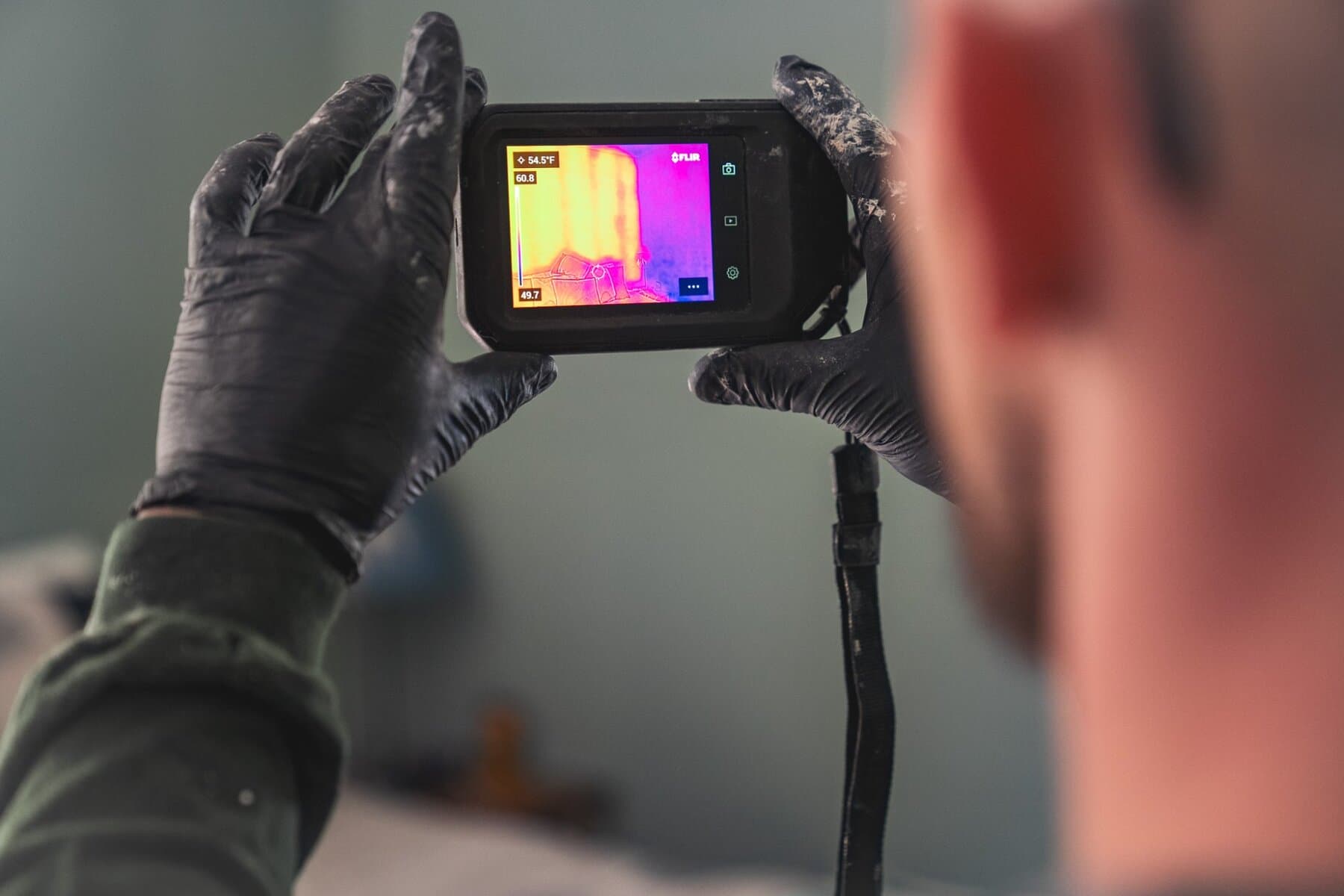
We Don't Just Measure — We Show You
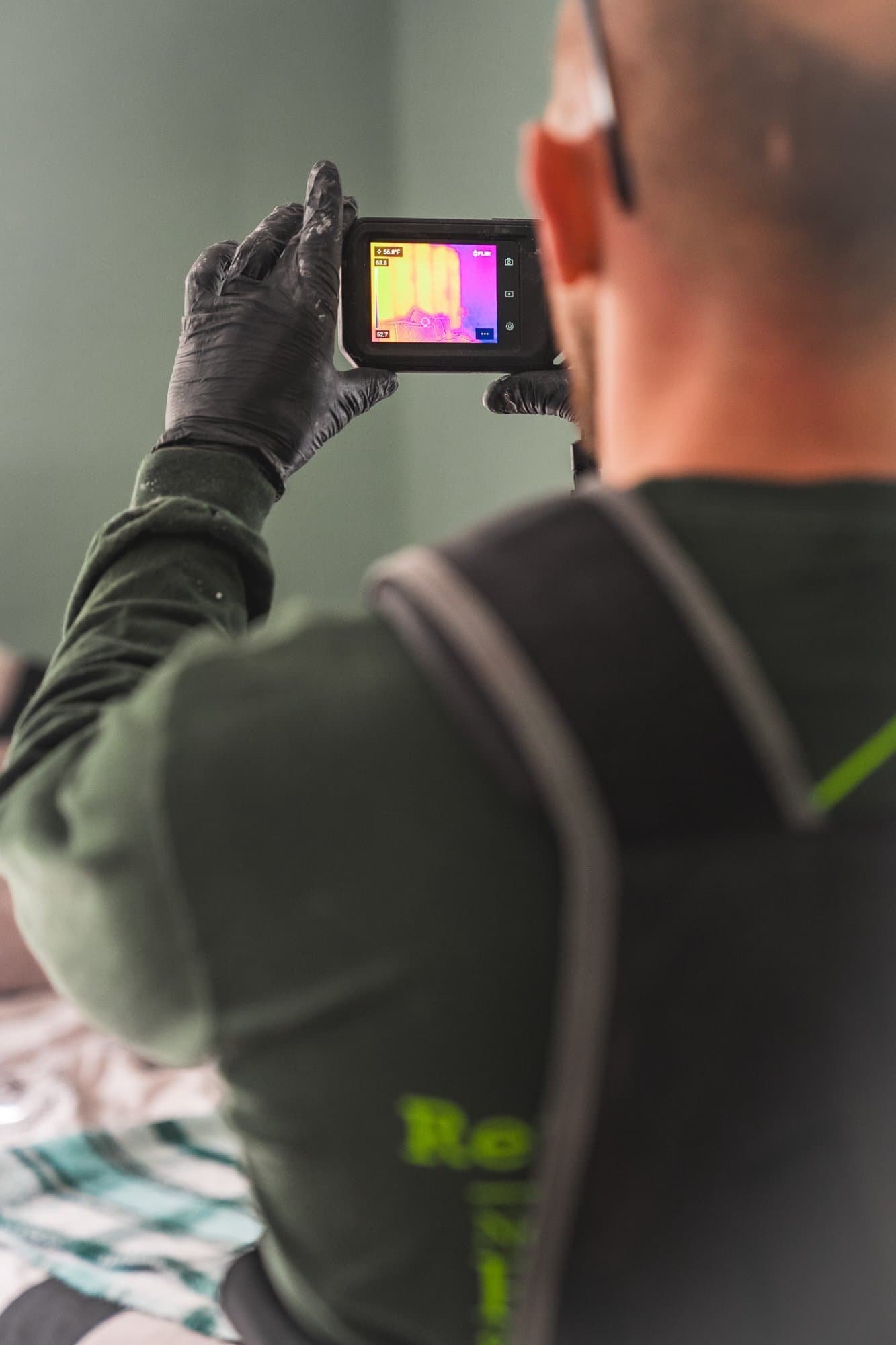
While the blower door fan is running and your home is depressurized, our BPI-certified technicians use FLIR thermal imaging cameras to visualize exactly where conditioned air is escaping.
Cold air infiltration shows up as blue and purple on the thermal camera. Hot spots appear in red and orange. This gives you and our team a clear visual map of your home's weak points — no guesswork involved.
- Thermal images included in your assessment report
- Before and after scans to verify insulation performance
- Identifies hidden leaks invisible to the naked eye
- Documents backdrafting and safety concerns
Understanding Your ACH50 Score
ACH50 stands for Air Changes per Hour at 50 Pascals of pressure. It tells you how many times per hour the entire volume of air in your home is replaced through leaks. Lower is better.
10–20 ACH50
Very Leaky
Older homes, significant drafts, ice dam problems, very high energy bills.
7–10 ACH50
Average
Most pre-2000 construction. Noticeable drafts in winter, uneven room temperatures.
5–7 ACH50
Good
Meets older energy codes. Some air leakage but generally comfortable.
3–5 ACH50
Tight
Current Minnesota code requirement for new construction. Well-sealed home.
Below 3 ACH50
Excellent
High-performance home. Passive House standard targets 0.6 ACH50.
The Most Common Leak Locations
Air leaks are rarely where homeowners expect. The biggest culprits aren't windows and doors — they're the hidden penetrations in your attic floor, rim joists, and wall cavities that you can't see or feel without testing.

Why Testing Matters More in Minnesota
6+ Month Heating Season
With heating seasons stretching from October through April, even small air leaks compound into massive energy waste over a Minnesota winter.
Backdrafting Safety Risk
Air leaks can cause combustion gases from your furnace or water heater to backdraft into living spaces — a serious carbon monoxide risk that blower door testing can identify.
MN Code: 3 ACH50
Minnesota requires all new homes to achieve 3 ACH50 or better. Most existing homes score 7–15. A blower door test shows you exactly where you stand and what to fix first.

What Happens With Your Results
Your blower door results aren't just a number — they're a roadmap. We use the ACH50 score combined with our thermal imaging findings to build a prioritized plan that targets the biggest energy losses first.
Detailed Assessment Report
ACH50 score, thermal images, and a room-by-room breakdown of where air is leaking.
Prioritized Recommendations
We rank solutions by impact — so you know which improvements will save the most energy for your budget.
Post-Work Verification
After insulation work, we re-test to measure the improvement and verify results with thermal imaging.
Utility Rebate Documentation
Test results serve as documentation for Xcel Energy, CenterPoint, and other Minnesota utility rebate programs.
Blower Door Test FAQ
How long does a blower door test take?
The test itself takes 15–20 minutes. A full diagnostic assessment including thermal imaging and leak tracing typically takes 1–2 hours depending on home size.
Is a blower door test required in Minnesota?
Yes, for new residential construction. Homes must achieve 3 ACH50 or better to pass inspection. For existing homes, testing is not required but is highly recommended before any insulation project.
Will it damage my home?
No. The test creates gentle negative pressure — about the same as a 20 mph wind against your house. No structural impact whatsoever.
Do I need to prepare anything?
Close all exterior windows and doors. Leave interior doors open. We handle the rest. If you have a fireplace, make sure the damper is in its normal closed position.
Can I test before and after insulation?
Absolutely — and we recommend it. Before/after testing gives you measurable proof of improvement. Homeowners typically see a 25% or greater reduction in air leakage after injection foam insulation.
How much does a blower door test cost?
Blower door testing is included as part of our free energy assessment for insulation projects. It can also be performed as a standalone diagnostic service — contact us for pricing.