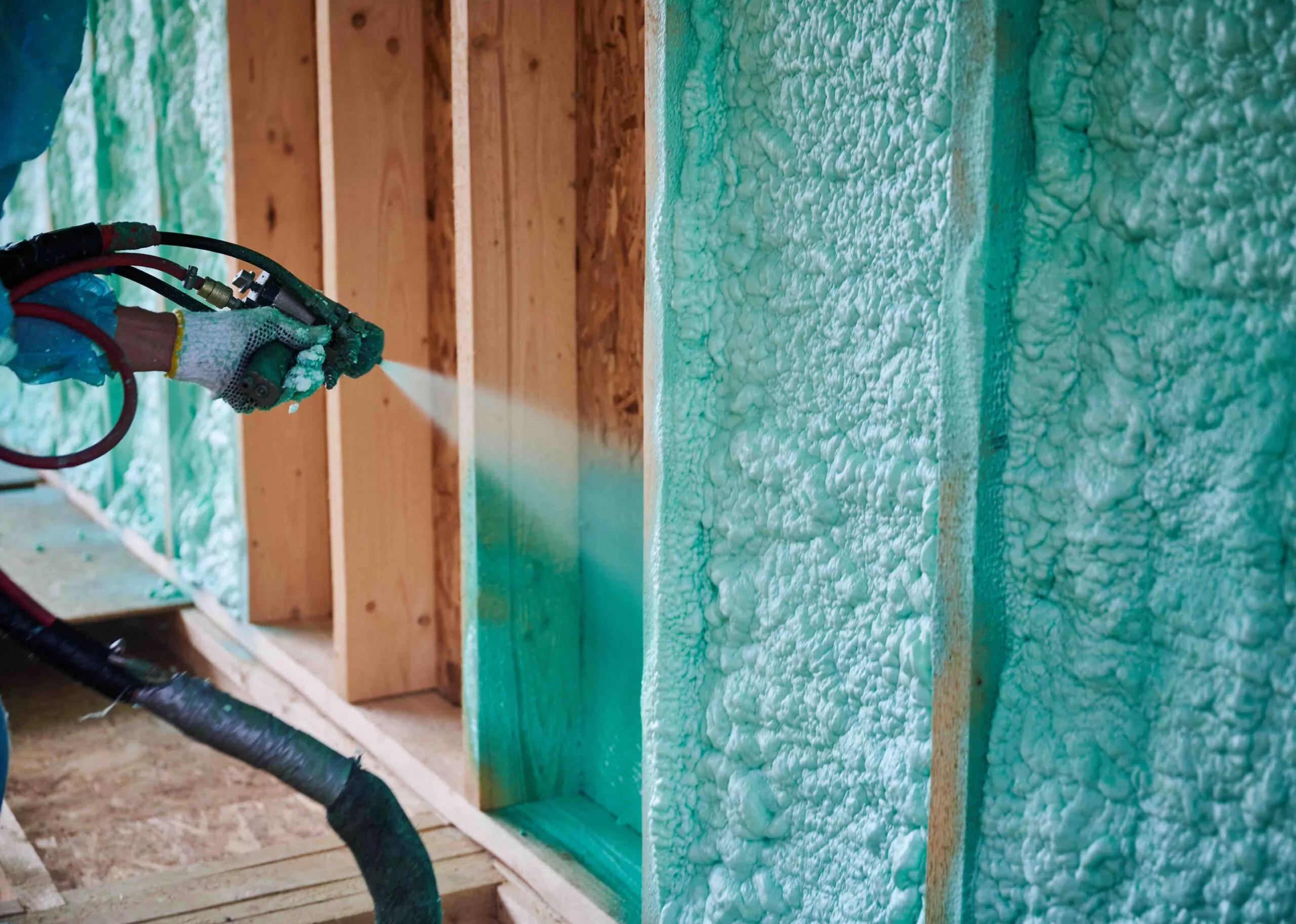
Spray foam insulation provides the highest R-value per inch of any insulation available, combined with a complete air seal in a single application. For Cloquet homeowners, this makes it the ideal solution for specific areas where standard insulation underperforms. Spray foam excels in the hard-to-reach areas common in Cloquet's bungalow homes — rim joists, bonus rooms over garages, cantilevered floor sections, and knee walls where other insulation types sag, settle, or leave gaps.
RetroGreen uses both open-cell and closed-cell spray foam, selecting the right type for each application based on the needs of your Cloquet home. Closed-cell foam (R-7 per inch) is our choice for rim joists, exterior-facing walls in crawl spaces, and any area with moisture exposure. Open-cell foam (R-3.7 per inch) is more cost-effective for interior applications like cathedral ceilings and bonus rooms. We recommend spray foam strategically rather than as a whole-house solution — it delivers the most value when targeted at specific problem areas.
local utility rebates may apply to qualifying spray foam insulation — call us for current eligibility in Cloquet homes. Our free diagnostic assessment identifies exactly where spray foam will make the biggest difference in your home's comfort and efficiency. Call (218) 414-7775 to schedule your visit.
Key Benefits
Highest R-Value Per Inch
Closed-cell spray foam delivers R-6.5 to R-7 per inch — nearly double traditional insulation. This means better performance in less space, critical for retrofit applications.
Complete Air Seal Built In
Unlike batt or blown-in insulation, spray foam seals air leaks as it insulates. No separate air sealing step needed. This dual function is why spray foam consistently outperforms other insulation types.
Moisture Barrier Protection
Closed-cell spray foam acts as a Class II vapor retarder, preventing moisture migration and condensation in wall and roof assemblies. It manages moisture and insulates in one application.
Structural Reinforcement
Closed-cell spray foam adds measurable racking strength to wall assemblies. It bonds structural components together, improving overall rigidity — a bonus in addition to its thermal performance.
Common Cloquet Home Types We Insulate
Bungalow
1920s-1960s rebuilt after the 1918 fireCommon in Downtown Cloquet, West End
Bungalow homes common in Cloquet from the 1920s-1960s rebuilt after the 1918 fire era are excellent candidates for spray foam insulation upgrades.
Rambler
1920s-1960s rebuilt after the 1918 fireCommon in Downtown Cloquet, West End
Rambler homes common in Cloquet from the 1920s-1960s rebuilt after the 1918 fire era are excellent candidates for spray foam insulation upgrades.
Foursquare
1920s-1960s rebuilt after the 1918 fireCommon in Downtown Cloquet, West End
Foursquare homes common in Cloquet from the 1920s-1960s rebuilt after the 1918 fire era are excellent candidates for spray foam insulation upgrades.
Our Process in Cloquet
Site Assessment and Preparation
We evaluate the space, determine the optimal open-cell vs. closed-cell application, and calculate target R-values. Surfaces not being insulated are protected. Proper ventilation is established for the installation process.
Professional Spray Foam Application
Certified technicians apply spray foam using calibrated, temperature-controlled equipment. The foam expands to fill cavities completely, bonding to surfaces and sealing every gap. Multiple passes build to the desired thickness.
Trimming, Inspection, and Completion
Excess foam is trimmed for a clean, uniform surface. Thickness is verified with measurement tools at multiple points. We walk you through the completed work and answer any questions about your new insulation.