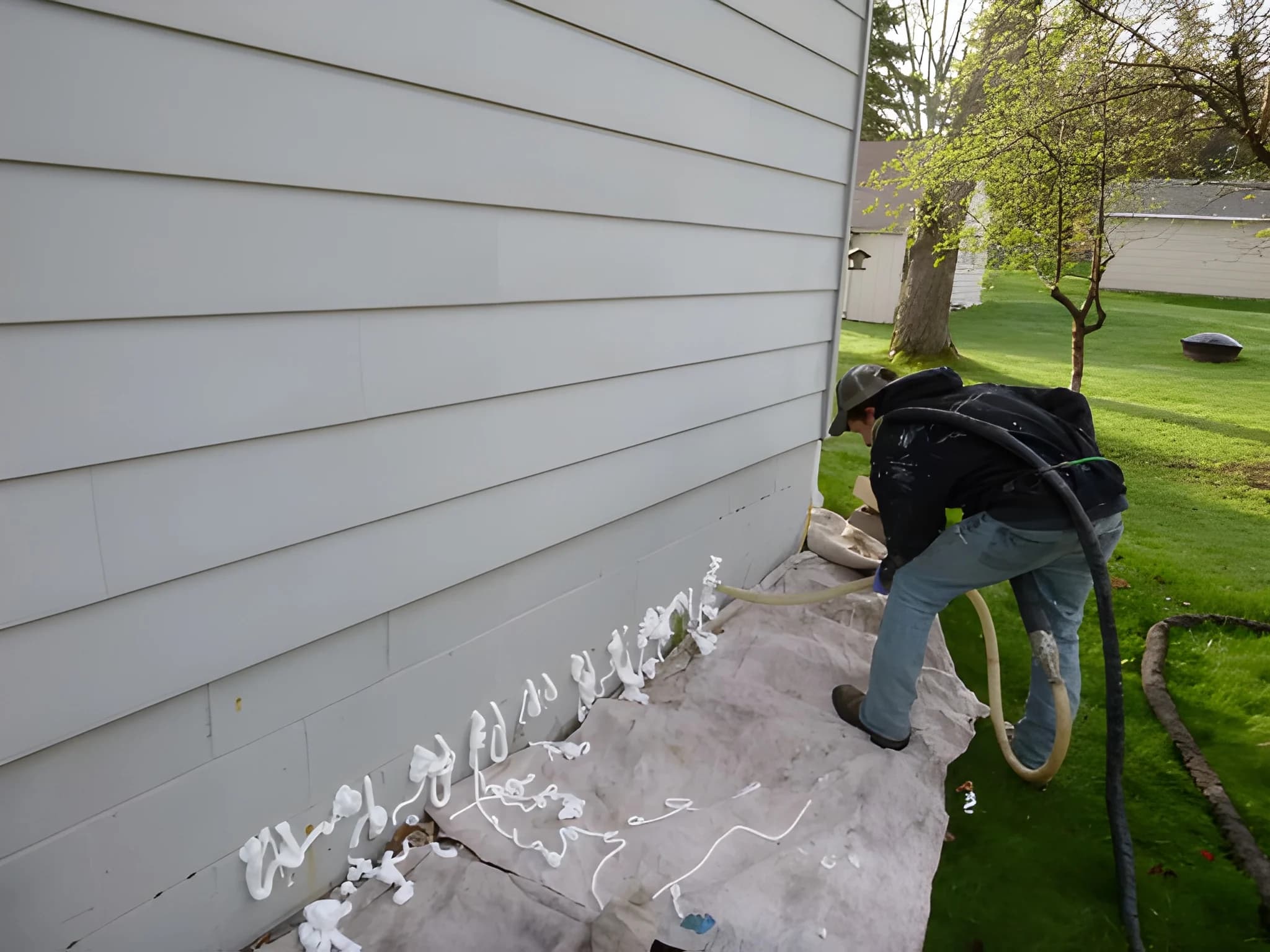
An uninsulated foundation is one of the biggest energy drains in St. Louis Park homes, especially during the long heating season when the ground temperature sits well below freezing. The concrete block foundations typical of St. Louis Park's 1940s-1960s post-war and early suburban era housing stock conduct cold directly into the basement and lower-level living spaces. Hollow-core block walls are particularly problematic because cold air circulates through the cores like chimneys.
RetroGreen insulates St. Louis Park foundations using rigid foam board installed against the interior foundation walls, combined with spray foam at the rim joist — where the floor framing meets the top of the foundation. This combination addresses both the conductive heat loss through the foundation wall and the air leakage at the rim joist, which is one of the leakiest spots in any Minnesota home. We also assess moisture conditions carefully, because insulating over a wet foundation wall can trap moisture and cause problems.
Foundation insulation in St. Louis Park typically saves homeowners $200-$500 per year in heating costs, and Xcel Energy rebates of Up to $1,200 per measure help offset the investment. If your basement is cold, damp, or driving up your heating bills, call (612) 276-5293 to schedule a free diagnostic assessment.
Key Benefits
Warmer Floors Throughout Your Home
Insulating below-grade walls stops cold from radiating upward through the floor system. Main-level floors feel warmer immediately without adding supplemental heating.
Usable Basement Space Year-Round
Transform a cold, damp basement into comfortable living space. Spray foam makes basements viable for home offices, bedrooms, and recreation rooms even in January.
Frozen Pipe Prevention
Spray foam insulation keeps pipe runs along foundation walls above freezing, eliminating the risk of burst pipes and the costly water damage that follows.
Moisture and Mold Control
Closed-cell spray foam acts as both an insulator and a vapor retarder, preventing the condensation on concrete walls that causes mold growth and structural deterioration.
Common St. Louis Park Home Types We Insulate
Rambler
1940s-1960s post-war and early suburban eraCommon in Fern Hill, Bronx Park
Rambler homes common in St. Louis Park from the 1940s-1960s post-war and early suburban era era are excellent candidates for foundation insulation upgrades.
Cape Cod
1940s-1960s post-war and early suburban eraCommon in Fern Hill, Bronx Park
Cape Cod homes common in St. Louis Park from the 1940s-1960s post-war and early suburban era era are excellent candidates for foundation insulation upgrades.
Split-level
1940s-1960s post-war and early suburban eraCommon in Fern Hill, Bronx Park
Split-level homes common in St. Louis Park from the 1940s-1960s post-war and early suburban era era are excellent candidates for foundation insulation upgrades.
Our Process in St. Louis Park
Step 1: Assessment and Preparation
We inspect your foundation walls to determine the type (poured concrete vs. block), check for cracks, moisture intrusion, and structural concerns. Any active water issues are addressed first. We then recommend the right insulation approach for your specific foundation.
Step 2: Drilling and Injection or Spray Application
For block foundations, we drill small access points and inject RetroFoam into the hollow cores — the foam expands to fill every void inside the block. For poured concrete walls, we apply closed-cell spray foam directly to the surface from the sill plate to the floor. In some cases, we combine both methods for maximum performance.
Step 3: Finishing and Verification
Injection points are sealed and patched cleanly. Excess spray foam is trimmed for a uniform surface. We verify complete coverage and proper thickness with measurement tools. Your foundation is ready for framing and finishing if you choose to complete the basement space.