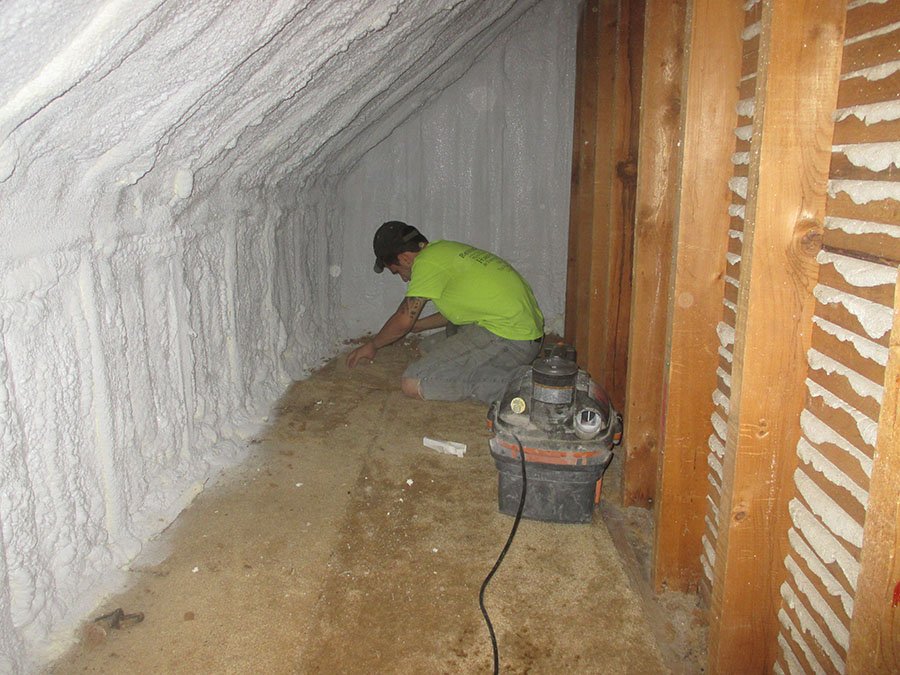

What is Spray Foam Insulation?
Spray foam insulation is a high-performance insulation material that expands on contact to fill cavities, seal air leaks, and create a continuous thermal barrier. Unlike traditional insulation that simply slows heat transfer, spray foam delivers both insulation and air sealing in a single application. According to the U.S. Department of Energy, air leaks can account for 25-40% of the energy used for heating and cooling a typical home.
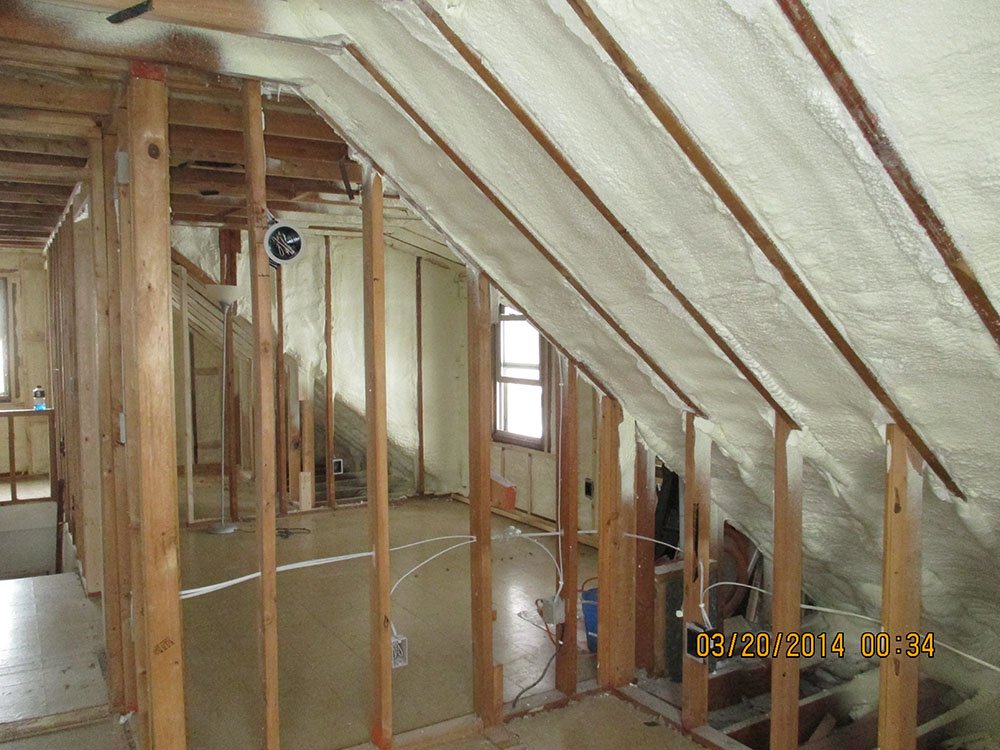
At RetroGreen Energy, we install spray foam insulation in attics, rim joists, crawl spaces, and foundations throughout Central Minnesota and the Twin Cities. Our factory-trained technicians use NCFI Polyurethanes products manufactured in the USA, ensuring consistent quality and safety in every installation.
Spray foam insulation is ideal for
- ✓ Attic floor and roofline applications where air sealing is critical
- ✓ Rim joist and band board areas that are major sources of air infiltration
- ✓ Crawl spaces and foundations where moisture control matters
Why Do Minnesota Homes Need Spray Foam Insulation?

Minnesota’s extreme climate creates unique challenges for homeowners. With winter temperatures regularly dropping below zero and summer humidity creating moisture concerns, your home’s building envelope faces constant stress. Spray foam insulation addresses these challenges by creating an air-tight seal that traditional insulation simply cannot match.
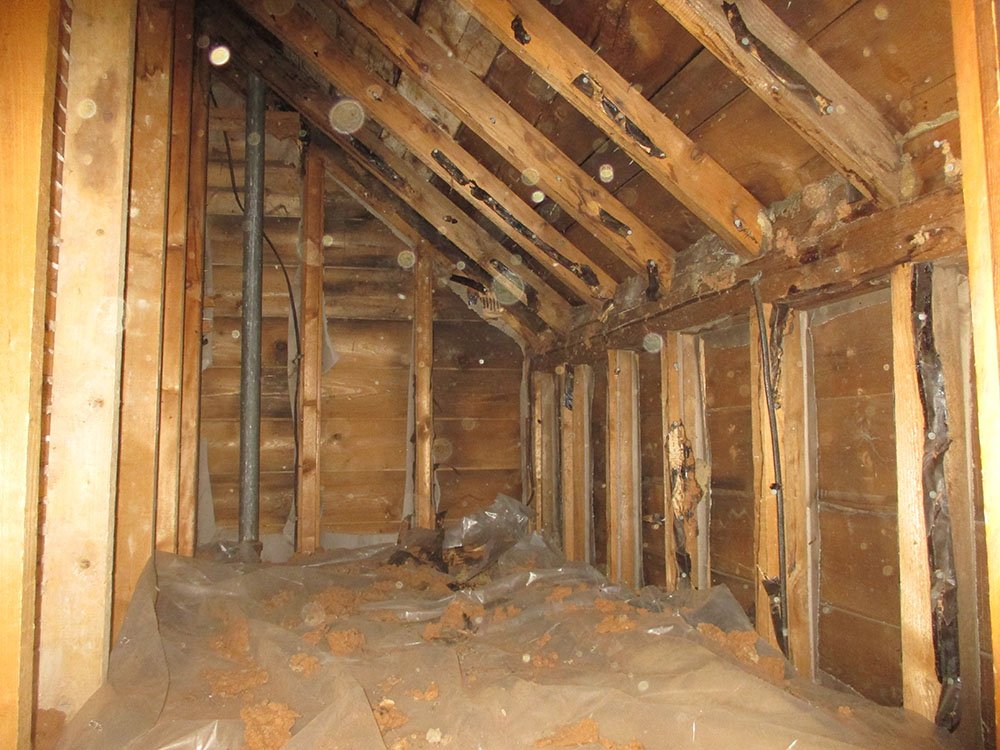
Many Minnesota homeowners discover that their drafty, uncomfortable rooms aren’t caused by window problems. The real culprit is often inadequate insulation and air leakage in hidden areas like the attic, rim joists, and foundation. A blower door test can reveal exactly where your home is losing conditioned air.
Common problems spray foam insulation solves
- ✓ Ice dams forming on roofs due to heat escaping through the attic
- ✓ Cold floors above uninsulated crawl spaces and garages
- ✓ Drafty rooms caused by air infiltration through rim joists and foundations
- ✓ Moisture and humidity issues in basements and crawl spaces
- ✓ High energy bills despite having existing insulation
If you’re experiencing these issues, a professional energy audit can help identify whether spray foam is the right solution for your home. Our BPI-certified technicians assess each home individually to recommend the most effective approach.
Benefits of Professional Spray Foam Insulation
Superior R-Value per Inch. Closed-cell spray foam delivers R-6 to R-7 per inch, nearly twice the insulating value of fiberglass. This means you can achieve higher R-values in tighter spaces, making it ideal for areas with limited depth like rim joists and cathedral ceilings.
Complete Air Sealing. Unlike batts and blown-in insulation, spray foam expands to fill every gap, crack, and void. This creates a continuous air barrier that stops conditioned air from escaping and outdoor air from infiltrating your home. Proper air sealing is often more important than R-value alone.
Moisture Management. Closed-cell spray foam acts as a vapor barrier, preventing moisture from passing through walls and ceilings. This protects your home from condensation, mold growth, and structural damage caused by trapped moisture.
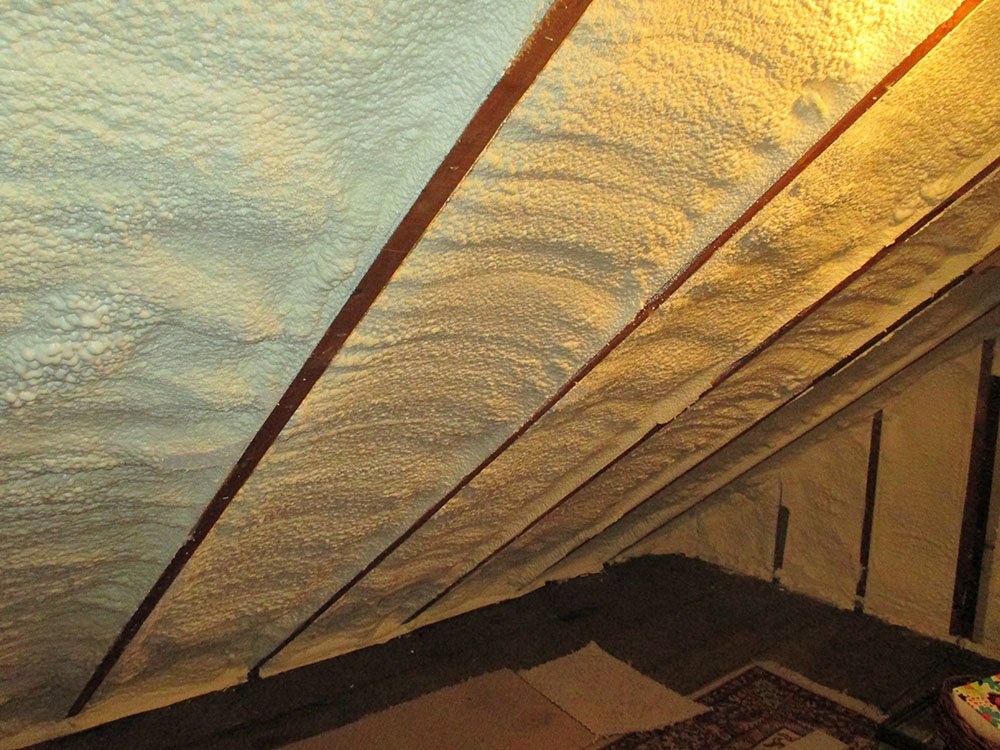
Structural Strength. Closed-cell spray foam adds rigidity to wall assemblies and roof decks. When applied to the underside of roof sheathing, it helps resist wind uplift and adds strength to the overall structure.
Long-Term Performance. Spray foam doesn’t settle, sag, or compress over time like traditional insulation. Once installed, it maintains its R-value and air-sealing properties for the life of your home.
Improved Indoor Air Quality. By sealing out outdoor pollutants, allergens, and pests, spray foam helps create a healthier indoor environment. Many homeowners notice significant improvements in air quality after spray foam installation.
Our Spray Foam Insulation Process
Step 1: Home Assessment and Consultation. We begin with a thorough inspection of your home, identifying problem areas and measuring existing insulation levels. Our BPI-certified technicians use diagnostic tools including blower door testing and thermal imaging to pinpoint exactly where spray foam will deliver the greatest benefit. We provide a detailed proposal with no hidden costs.
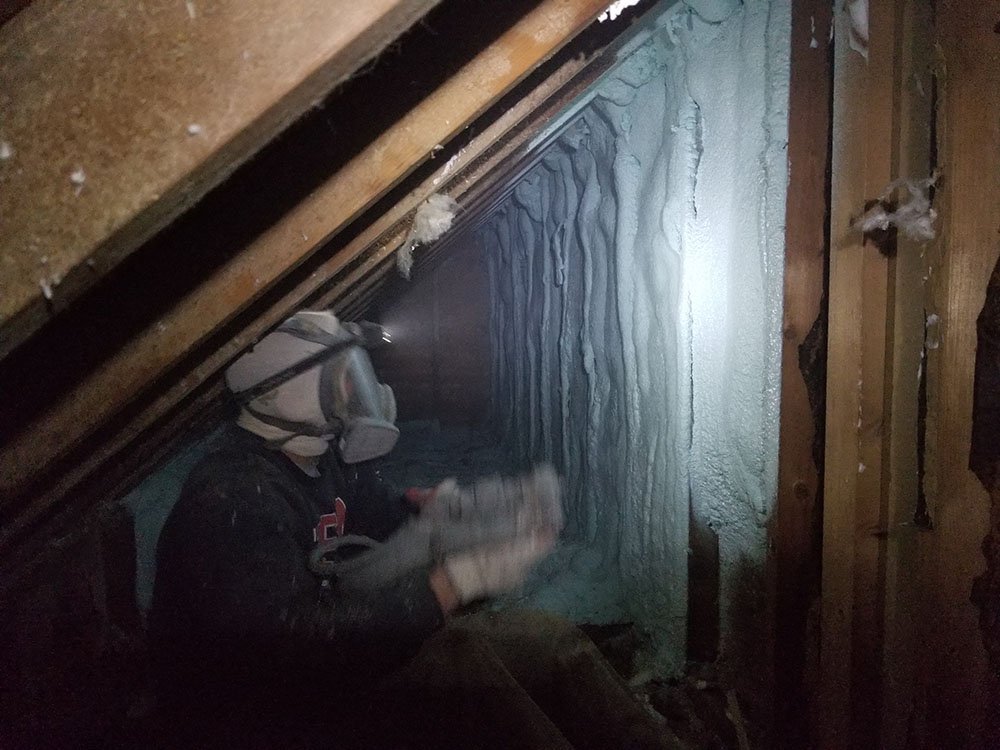
Step 2: Professional Installation. On installation day, our trained crews prepare the work area and protect your home’s interior. We apply spray foam using specialized equipment that heats and mixes the components precisely. The foam expands within seconds, filling cavities and adhering to surfaces. We use NCFI Polyurethanes products, a family-run American manufacturer that has been producing spray foam since the 1960s.
Step 3: Quality Verification and Cleanup. After installation, we verify coverage and thickness to ensure the specified R-value is achieved. Any excess foam is trimmed for a clean appearance. We conduct a final walkthrough with you, explain what was completed, and leave your home clean and ready to enjoy improved comfort.
Spray Foam Insulation Rebates and Incentives
Minnesota homeowners can take advantage of savings on spray foam insulation through utility rebates. RetroGreen Energy helps you navigate available incentives and complete the necessary paperwork.
Minnesota Utility Rebates. Xcel Energy, CenterPoint Energy, and Minnesota Energy Resources offer rebates for qualifying insulation improvements. Rebate amounts vary based on the scope of work and energy savings achieved. Visit our rebates page for current program details and eligibility requirements.
Financing Options. We offer financing to help spread the cost of your insulation project over manageable monthly payments. Contact us for current rates and terms.
Frequently Asked Questions About Spray Foam Insulation
What is the difference between open-cell and closed-cell spray foam insulation?
Open-cell spray foam has a lower density and provides approximately R-3.7 per inch. It’s more affordable and excellent for soundproofing but allows moisture to pass through. Closed-cell spray foam is denser, provides R-6 to R-7 per inch, and acts as both an air barrier and vapor barrier. Our technicians recommend the appropriate type based on your specific application and goals.
How long does spray foam insulation last?
Spray foam insulation is designed to last the lifetime of your home. Unlike fiberglass or cellulose that can settle, compress, or absorb moisture over time, spray foam maintains its R-value and air-sealing properties indefinitely. Most manufacturers offer warranties of 20 years or more.
Is spray foam insulation safe for my family?
Yes, once cured, spray foam insulation is inert and safe. During installation, our crews take precautions to ensure proper ventilation and keep occupants away from the work area. We typically ask that you stay out of the home during application and for a brief curing period. Our NCFI products meet all safety standards and are manufactured with the safest blowing agents available.
Can spray foam insulation be installed in existing homes without removing drywall?
Spray foam requires access to open cavities, so it’s typically used in accessible areas like attics, crawl spaces, rim joists, and basements. For enclosed wall cavities where drywall removal isn’t practical, we recommend RetroFoam injection foam, which can be installed through small holes in the siding or interior walls.
How much does spray foam insulation cost in Minnesota?
Spray foam insulation costs vary based on the type (open-cell vs. closed-cell), thickness required, accessibility of the area, and total square footage. While spray foam has a higher upfront cost than traditional insulation, it typically delivers greater energy savings and long-term value. We provide free assessments and detailed quotes so you can make an informed decision.
Where is spray foam insulation most effective in Minnesota homes?
In our Minnesota climate, spray foam delivers the greatest impact in attics (especially at the roofline for conditioned attic spaces), rim joists, crawl spaces, and foundation walls. These areas typically have the most air leakage and benefit most from spray foam’s combined insulation and air-sealing properties. Our technicians can identify the best opportunities during a home assessment.
Get A FREE Quote
Schedule your no-obligation assessment with our BPI-certified technicians.
Why Get a Quote?
- ✓ Free home assessment
- ✓ No high-pressure sales
- ✓ Honest recommendations
- ✓ Rebate assistance
- ✓ Financing available
We Serve
St. Cloud • Minneapolis • Brainerd • Alexandria • Willmar • Monticello • Elk River • Buffalo • Big Lake • Sartell • Sauk Rapids • and surrounding areas